


Galaxy Division: Space Battles
4.5215.00 Reviews
App Specs
- Version
- 1.0.10042
- Updated On
- License
- Free
- Downloads
- 100,000+
- Developer
- Armada Forge Games
- Categories
- Action
- Platform
- Android
Screenshots
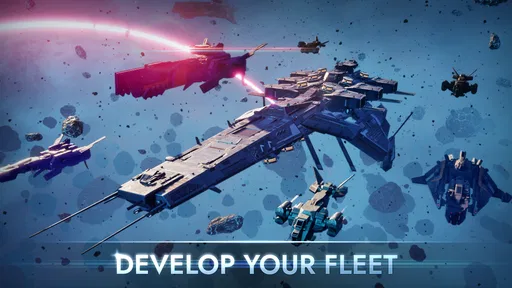
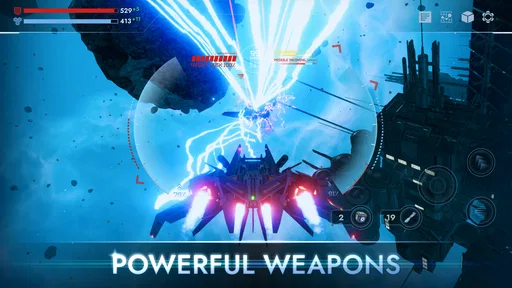
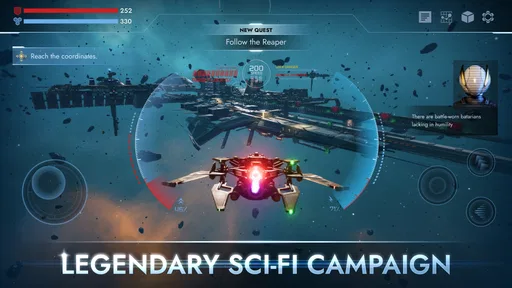
 Analysis by AppCompare
I went into Galaxy Division: Space Battles expecting a straightforward mobile action game, and that is largely what I found: a free space-combat experience built around taking control of warships, firing into enemy formations, improving your fleet, and returning for another battle. It comes from Armada Forge Games and sits firmly in the action category rather than trying to be a slow, simulation-heavy space strategy game.
That distinction matters. The appeal here is not managing a huge galaxy from a spreadsheet or waiting for long construction timers to finish. The immediate attraction is the feeling of entering combat, making quick decisions, seeing an enemy ship break apart, and then using the result to make your next attempt stronger. The game’s central promise is easy to understand, but its success depends on how satisfying that repeated cycle feels after the novelty of the first few fights wears off.
After spending time with it, I would describe it as a good fit for players who want accessible space PvP battles with a progression layer attached. It is also a reasonable choice for someone who likes upgrading ships but does not want a complicated space-management game. The important question is whether you enjoy repeating short action-focused encounters and gradually tuning a fleet, because that loop is the real product.
How the battle loop feels from the first shot to the next launch
I find the opening loop easiest to enjoy when I give each battle a small purpose: learn how an encounter plays, see whether a change helps, then decide if I want another launch. That keeps the shooting and ship upgrades connected rather than turning progress into a blur of taps. It also makes the next practical question clearer: what should I check before assuming a rough session is the game’s fault?
The first action is immediate and easy to understand
The strongest part of the opening experience is how quickly the game communicates its purpose. You are not asked to learn an elaborate political system before seeing combat. You begin with the basic fantasy of a warship in space: find a target, attack, survive the exchange, and work toward a better result. That directness makes the game approachable even if you normally avoid strategy titles.
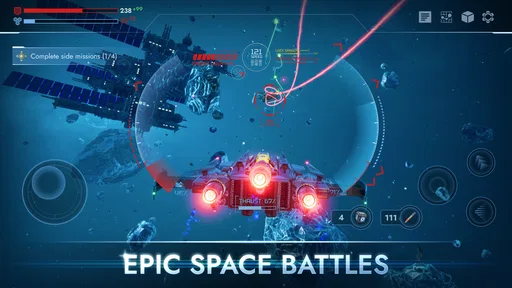
The shooting itself is the first important test. Space combat can easily feel weightless on a phone, especially when enemies are small or the screen becomes crowded. Here, the action has to do more than display lasers and explosions. Each attack should help me understand whether I am making progress, whether an opponent is becoming vulnerable, and whether my current ship is equipped for the encounter. That connection between input and visible consequence is what keeps the opening from becoming a simple light show.
I also appreciate that the game does not require me to approach it like a traditional desktop strategy title. A short session can begin with one practical goal: win a fight, test an upgraded ship, or see whether a different combat approach performs better. That makes it suitable for a quick break, although players looking for a long uninterrupted campaign may find the structure less absorbing than a larger console-style space game.
Worth Reading Before You Choose

Flipboard Shows What News Apps Must Do Beyond the Feed

Switching to Android Auto Means Rethinking Your Driving Routine

Google Calendar Makes a Crowded Week Easier to Manage

Ludo King Makes the Most of the Minutes Between Plans

Baby Panda World Brings Quick Play to Modern Phones, but Its Game Library Feels Busy

ESPN’s Live Game View Makes Following Close Games Easier
One useful habit is to treat the first few battles as observation rather than as a race to spend every available reward. Watch which opponents force you to react, which attacks seem to punish careless movement or targeting, and where your ship begins to fall behind. Upgrading immediately may produce a quick power increase, but understanding the source of a defeat is usually more valuable than blindly improving the largest visible number.
The feedback rhythm gives each encounter a purpose
The action loop works when the game answers your decisions quickly. I want to know whether a shot mattered, whether my ship is surviving because of a smart choice or simply because the enemy is weak, and whether a victory gives me a meaningful reason to continue. The rhythm in Galaxy Division is built around that sequence: engage, react, finish the battle, receive progress, and prepare for another attempt.
That rhythm is more compelling than the store summary alone suggests because it turns each fight into a small experiment. I can enter with a particular ship, see where its strengths help, notice where it struggles, and then decide whether the next improvement should support offense or survival. Even when a battle ends in defeat, it can still provide useful information if I can identify the moment when the encounter turned against me.
The danger is repetition. Action games need escalating tension, not merely a longer list of battles. If the encounters begin to feel interchangeable, the upgrade screen becomes the only source of excitement. That is where personal discipline helps: instead of treating every match as something to rush through, I would set a small test for each session, such as trying a different ship or focusing on cleaner target selection. This makes the feedback more meaningful than simply counting wins.
For players new to this kind of game, the practical approach is to avoid changing several things at once. If you upgrade multiple ships and alter your entire approach between battles, it becomes difficult to tell what actually helped. Improve one area, play again, and compare the result. That simple method makes the progression system easier to read and reduces the feeling that success depends on random trial and error.
Upgrades are the reward, but spending decisions matter
Winning a battle feels useful because it feeds back into the fleet. The reward is not only the satisfaction of surviving a firefight; it is also the possibility of making a warship more capable and returning to combat with a clearer plan. That creates a healthy reason to replay encounters, especially for players who enjoy seeing a previously difficult opponent become manageable after a few thoughtful improvements.
The upgrade layer is also where the game becomes more than a basic shooter. A pure arcade experience can be enjoyable for a few minutes, but a fleet-building element gives victories a longer shadow. A successful battle changes what I can attempt next, while a loss encourages me to reconsider whether I need more strength, a different ship, or better execution. The best version of this loop makes progress feel earned rather than automatic.
I would not recommend spending rewards impulsively simply because an upgrade is available. The better question is what is currently stopping you. If your ship can deal damage but collapses before the end of an encounter, defensive improvement is more useful than adding even more firepower. If you survive comfortably but cannot finish targets, offensive progress may be the sensible choice. This sounds obvious, but mobile progression systems often tempt players to spread resources too thinly across everything.
There is also a trade-off between improving a dependable ship and experimenting with a less familiar one. Concentrating resources can make the next battles easier, while spreading them across several ships may give you more flexibility but delay a noticeable power increase. I prefer a middle path: keep one reliable option strong enough for regular progress, then use spare resources to test alternatives. That protects the session loop from becoming a wall whenever an experiment fails.
The game is free to play, with individual in-app purchases ranging from $0.99 to $99.99. That makes resource planning especially relevant for anyone who wants to keep spending under control. I would begin without buying anything, learn how the normal progression feels, and only consider a purchase if it solves a clearly understood problem rather than responding to frustration after a defeat. A player who dislikes any form of optional spending pressure should approach cautiously, even though the entry cost is free.
The session reset is what brings me back
Every battle eventually resets the situation. You leave the encounter with a result, make a decision about your fleet, and begin again from a slightly different position. That reset is not a weakness by itself; it is the structure that makes repeated play possible. The question is whether the next launch feels like a fresh chance or merely the same task with a larger enemy health bar.
In my experience, the reset works best when I finish a session with a specific reason to return. Perhaps I want to see whether a ship upgrade changes the outcome, recover from a poor run, or test a new way of approaching combat. The game benefits from this small sense of unfinished business. It does not need to make every session dramatic if it can make the next one understandable and inviting.
A realistic use case is a short evening break. I might have enough time for a few battles but not enough for a long story-driven game. Galaxy Division suits that situation because the core activity is clear: enter combat, make decisions under pressure, collect the result, and stop after reaching a natural pause. The same structure can also work during a commute or between tasks, provided the player is comfortable with action gameplay in short bursts rather than expecting a deep narrative arc.
On the other hand, I would skip it if I mainly want a persistent, richly narrated universe or a slow tactical game where planning matters more than direct combat. The title is centered on shooting and upgrading warships, so someone who prefers exploration, diplomacy, or detailed fleet logistics may find the repeated battle-reset cycle too narrow. A conventional arcade shooter may also be a better choice if you want immediate action without progression decisions.
Who will enjoy the loop, and who should look elsewhere
Galaxy Division is at its best for players who like visible improvement. If you enjoy taking a ship that feels underpowered, investing carefully, and then returning to defeat an opponent that previously caused trouble, the structure gives you a clear reason to continue. It is also approachable for people who want mobile space combat without learning a large set of systems before their first meaningful encounter.
It is less suitable for players who need every session to introduce a major new idea. A progression-driven action game naturally repeats its core actions. The satisfaction comes from better execution and stronger ships, not from constantly changing genres. If repetition quickly feels like grinding to you, the reward cycle may lose its appeal before the upgrade system has time to show its value.
The age rating is Everyone, which makes the game broadly accessible from a content perspective. That does not mean every player will enjoy it equally. Younger or casual players may appreciate the direct controls and clear objective, while experienced action fans may want more depth, sharper competition, or a wider range of combat possibilities than a mobile-focused title provides.
The game has reached over 100K installs and holds an average rating of 4.5 from around 3.1K ratings, with 215 written reviews. Those figures suggest that the basic concept is connecting with a meaningful audience, but they should not replace personal judgment. A strong average can tell me that many players find the loop enjoyable; it cannot tell me whether my own tolerance for repetition, upgrade planning, or optional purchases matches theirs.
Practical advice before committing to the fleet
My first recommendation is to play several battles before deciding what kind of player you are in this game. Some people will immediately focus on winning efficiently, while others will enjoy testing ships and learning through failure. Both approaches are valid, but they lead to different upgrade priorities. The game becomes more satisfying when your spending and play style point in the same direction.
Second, do not judge a ship after one disappointing encounter. A poor result may reflect an unsuitable matchup, an underdeveloped upgrade path, or a mistake during the battle rather than a useless ship. Give yourself a repeatable test: use the same general approach, change one meaningful factor, and see whether the outcome improves. This turns frustration into a manageable learning process.
Third, protect the reason you started the session. If you opened the game for a quick action break, avoid turning every loss into a demand to keep playing until you recover. The reset loop is designed to make another attempt attractive, but that does not mean every attempt is worth forcing. Stopping after a clear goal can make the next return feel more enjoyable than pushing through a tired, unfocused run.
The current version is 1.0.10042 and requires Android 9 or later. For Android users, that gives a practical compatibility check before downloading. The game is free to start, but the listed purchase range means families and players managing a strict budget should keep an eye on spending settings. Those details do not change the action itself, but they affect whether the overall experience feels comfortable over time.
My verdict on the action-reward-reset cycle
What I like most about Galaxy Division is that its purpose is clear from the first battle. It wants me to shoot, survive, improve a warship, and see whether the next encounter goes better. That clarity is valuable on mobile, where a game has only a short time to prove that another session will be worth starting. The upgrade system gives victories a practical consequence, while the reset makes it easy to return without needing to reconstruct a complicated story.
Its limitations are equally clear. The experience depends heavily on how much enjoyment you get from repeating combat and making incremental improvements. Players looking for a deep simulation, a large narrative campaign, or a completely purchase-free progression path may prefer another option. Even fans of action games should approach it with the understanding that the long-term appeal comes from the loop, not from a radically different activity in every session.
For me, that loop is convincing when I enter with a goal, pay attention to what the battle teaches me, and spend rewards with a reason. The action creates the immediate excitement, the feedback explains what happened, the reward gives the victory weight, and the reset creates a new question for the next launch. The best reason to play again is not simply that another battle is available, but that I know what I want to try differently.
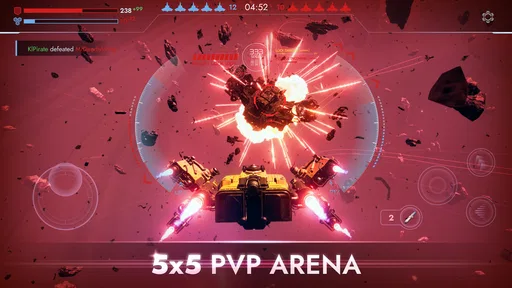
I would recommend Galaxy Division to a friend who wants a free-to-start action game about upgrading warships and competing in space battles, especially if that friend enjoys short repeatable sessions. I would not recommend it to someone who dislikes progression loops or wants a more elaborate alternative to mobile combat. Within its chosen lane, Armada Forge Games has made a focused experience that is easy to begin and potentially rewarding to refine, as long as you treat each return to the battlefield as a deliberate experiment rather than an obligation.
Pros
- Fast-paced battles are easy to learn but still reward tactical decisions.
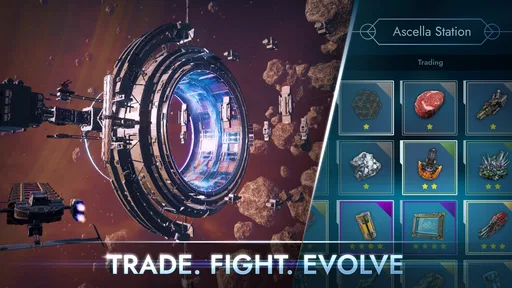
- A wide range of ships and weapons supports different play styles.
- Short missions work well for quick gaming sessions.
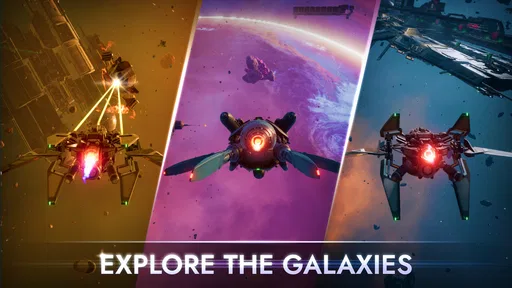
- Space visuals and combat effects make battles engaging on mobile screens.
- Regular progression gives players clear goals beyond individual victories.
Cons
- Some upgrades may require considerable grinding to unlock.
- The interface can feel crowded during intense battles.
- Enemy difficulty may rise sharply between certain missions.
- Limited offline functionality can restrict play without an internet connection.
- Repeated battle objectives may reduce variety during longer play sessions.
FAQs for Galaxy Division: Space Battles
What is Galaxy Division: Space Battles?
Galaxy Division: Space Battles is a science-fiction strategy game focused on commanding fleets, expanding your presence across the galaxy, and fighting rival forces in space. Before downloading, players should expect a mix of resource management, ship upgrades, tactical battles, and progression systems rather than a simple arcade shooter. The experience is designed for users who enjoy building an interstellar force over time.
How do battles work in Galaxy Division: Space Battles?
Battles generally require players to prepare a fleet, select suitable ships or units, and use upgrades and tactical decisions to improve their chances of winning. Success is not based only on having powerful vessels; fleet composition, technology development, and understanding enemy strengths can also matter. New players should be prepared to learn the game gradually as more systems and opponents become available.
Can Galaxy Division: Space Battles be played offline?
You should not assume that Galaxy Division: Space Battles offers a complete offline experience. Games built around online progression, competitive events, synchronized accounts, or shared galaxy features commonly require an internet connection for important functions. An occasional connection may also be needed to save progress or load updates. Check the current store description and in-game requirements before downloading if offline play is essential.
Is Galaxy Division: Space Battles free to download and does it include in-app purchases?
The game may be available as a free download, but users should review its monetization carefully before installing. Space strategy games often include optional purchases for resources, acceleration items, premium currency, special ships, or progression advantages. These purchases are not necessarily required to begin playing, although they can affect the speed of development. Parents should also review purchase restrictions if children use the device.
What devices are compatible with Galaxy Division: Space Battles?
Compatibility depends on the version available for your platform, the operating system installed, and the hardware requirements listed on the official store page. Because strategy games with animated battles and online features can require considerable storage and memory, older phones or tablets may experience longer loading times or reduced performance. Confirm the latest Android or iOS requirements, available space, and connection needs before downloading.


